Luan named chair of Computer Science
April 8, 2026 - Carly Bowling
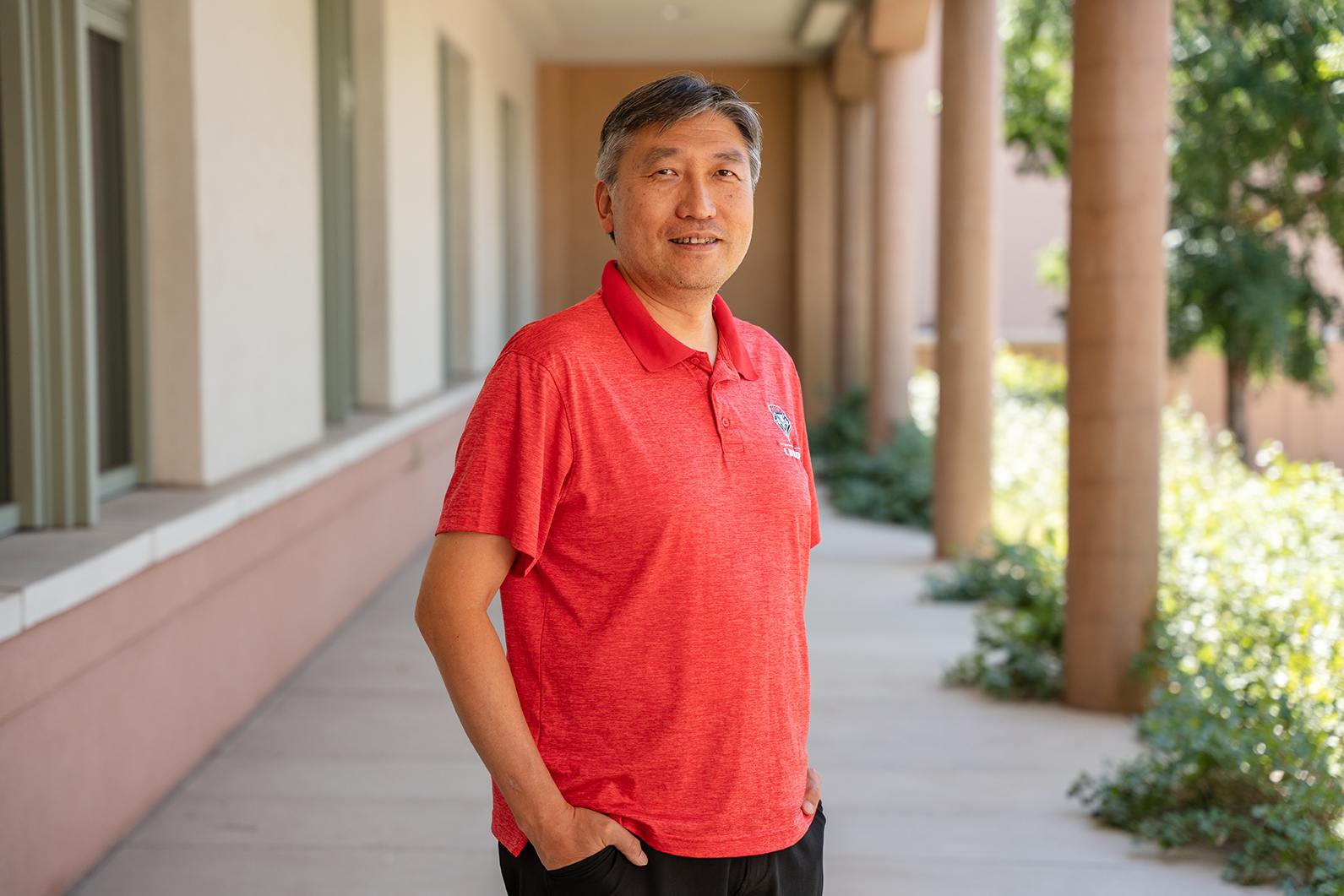
Professor Shuang “Sean” Luan has been named chair of the Department of Computer Science and will step back from the position of associate dean for academic affairs and community engagement to accept the role. Luan has held the chair position on an interim basis since last fall.
As associate dean, Luan supported the establishment of the First-Year Engineering Program, strengthened math pathways, and worked on adding new bachelor’s programs in bioengineering and integrative engineering.
“In his role as associate dean of academic affairs and community engagement, Dr. Luan helped us strategically advance student success across the School of Engineering,” Donna Riley, Jim and Ellen King Dean of Engineering and Computing, said. “His passion for students, institutional knowledge and professional expertise have proven to be invaluable in leading the Department of Computer Science since last fall, and I look forward to what he will accomplish as permanent chair.”
As chair, Luan will guide the Department of Computer Science as it navigates opportunities and challenges surrounding the changing AI landscape. While serving as interim chair, Luan completed revision of the department’s curricula, shepherded AI certificate programs, onboarded three faculty members, and fully staffed the department.
“I believe the future of computer science is bright and increasingly interdisciplinary. On one hand, we must invest in teaching programming fundamentals and AI/machine learning tools to the broader UNM community,” Luan said. “Within the CS community itself, in addition to strengthening our existing areas, we aim to strategically expand into several high-impact areas such as cybersecurity and software engineering, extended reality, cyberphysical systems, including robotics, biomedical engineering and informatics.”
Luan has been a professor in the department since 2004 after earning his master’s degree and Ph.D. in computer science at the University of Notre Dame. His research initially centered around computational geometry, but his interests shifted to radiation therapy and radiosurgery during graduate school. He has worked at the intersection of computer science and radiation cancer therapy for over 25 years, using his computational expertise to improve treatment quality and reduce treatment times.
He holds over a dozen issued patents, and his intellectual properties have been licensed by leading vendors in radiation oncology, with some already implemented in clinical treatment.